Sunday, 18 November 2018

Dard Rehta Hai

दर्द रहता है
अब
दीवार पर  टंगी
तस्वीर की सूरत
काग़ज़ पीला है
रंग फीके हैं
याद के फ्रेम को
वक़्त की दीमक ने
खोखला किया कबका ..
पर अब भी कभी कभी

लौट जाती है उधर को भी नज़र क्या कीजे '*


درد  رہتا  ہے
 اب   
دیوار  پر  ٹنگی 
تصویر  کی  صورت   
 کاغذ پیلا ہے 
رنگ  پھیکے  ہیں
یاد  کے  فریم  کو
وقت کی دیمک  نے 
   کھوکھلا  کیا  کبکا   
پر اب بھی کبھی  کبھی
 لوٹ  جاتی  ہے  ادھر  کو  بھی  نظر  کیا  کیجے '*

dard rehta hai
ab deewar par tangi
tasveer ki surat
kaagaz peela hai
rang pheeke hain
yaad ke frame ko
waqt  ki deemak ne
khokhla kiya kabka....
par ab bhi kabhi kabhi

laut jaati hai udhar ko bhi nazar kya kije'*

*Faiz Ahmed Faiz's line from 'Mujhse Pehli si Mohabbat Mere Mehboob na Maang' 

Friday, 2 November 2018

Khudfarebi

इक अधूरा सा फ़िक़रा
इक फटे से रुक़्क़े पर
इक इबारत सी लिखी
काई से पत्थर पर
इक अनकहा सा अफसाना
सुनते रहते हैं
इक तवक़्क़ो सी
लिए जाती है
क़दमों को कहीं
चलता रहता है सफर
इक घटा के बादल का
इक दरया के साथ साथ
रास्तों मंज़िलों से यूँही
इक खुद्फरेबी में मुसाफिर है
सांस चल रही है
नब्ज़ थम गयी कब की!
اک  ادھورا  سا  فقرہ 
اک  پھٹے  سے  رققے  پر 
اک  عبارت  سی  لکھی 
کا یی  سے  پتھر  پر
 اک آنکھا سا  افسانہ 
سنتے  رہتے  ہیں 
 اک   توققع سی 
لئے  جاتی  ہے  
قدموں  کو  کہیں 
چلتا  رہتا  ہے  سفر  
اک  گھٹا  کے  با دل  کا 
اک  دریا  کے  ساتھ  ساتھ 
راستوں  منزلوں  سے  یونہی 
اک  خودفریبی  مین   مسافر  ہے 
سانس چل  رہی ہے   
!نبض  تھم  گی  کبکی   


Ik adhoora sa fiqra
Ik phate se ruqqe par
Ik ibarat si likhi
Kaayi se patthar par
Ik ankaha sa afsana
Sunte rehte hain
Ik tavaqqo si
Liye jaati hai
Qadmon ko kahin
Chalta rehta hai safar
Ik ghata ke badal ka
Ik darya ke saath saath
Raston manzilon se yunhi
Ik khudfarebi me musafir hai
Saans chal rahi hai
Nabz tham gayi kabki!  

Friday, 19 October 2018

कभी वक़्त बदला, कभी हम बदल गए
सितम करम सब बख्त के यूँ सहे गए
गो  सितारों ने रस्ते रखे हुए थे रोशन
पर ना जाना था हमको,ना हम घर गए
ना जानते जो आपको तो करते भी कुछ गिला
जो जानते थे हम तो, खामोश सुन गए
शहर की वो ईमारत कब से पड़ी थी खाली
नए हुक्मरान आये, आकर के बस गए
ताख़ीर से भी मिला करती थी कुछ दुआऐ
अबके हुआ कुछ ऐसा हाथ उठे और गिर गए
कुछ आवाज़ों में तासीर ऐ मसीहाई थी
सदा सुनकर हम सादा दिल भी उधर गए
कुछ लोग पुरानी राहों के मिले थे आज गोया
बादल बरसती धूप में आ करके खुल गए
कौनसी मिटटी के जाने ये अहल ए सुख़न रहे
ना ताब ला सके तूर की ना बुतकदे गए

کبھی  وقت  بد لا , کبھی  ہم  بدل  گئے 
ستم  کرم  سب  بخت کے یوں سہے   گئے 
گو  ستاروں  نے  رستے  رکھے  ہوئے  تھے  روشن 
پر  نا   جانا  تھا  ہمکو , نا   ہم  گھر  گئے 
نا جانتے  جو  آپکو  تو  کرتے  بھی  کچھ  گلا  
جو  جانتے  تھے  ہم  تو , خاموش  سن  گئے 
شہر  کی وہ عمارت  کب  سے  پڑی  تھی  خالی 
نیے   حکمران  آیے, آکر  کے  بس  گئے 
تاخیر  سے  بھی  ملا  کرتی  تھی  کچھ  د عاییں 
ابکے  ہوا  کچھ  ایسا  ہاتھ  اٹھے  اور  گر  گئے 
کچھ  آوازوں  میں   تاثیر  مسیحآیی   تھی 
صدا سنکر  ہم  سادہ  دل  بھی  ادھر  گئے 
کچھ  لوگ  پرانی  راہوں  کے  ملے   تھے  آج  گویا 
با دل  برستی  دھوپ  میں  آ  کرکے  کھل  گئے 
کونسی  مٹی  کے  جانے  یہ  اہل   سخن  رہے 
نہ  تاب  لا سکے  طور  کی  نہ  بتکدے  گئے 


Kabhi waqt badla, kabhi hum badal gaye
Sitam karam sab bakht ke yun sahe gaye
Go Sitaron ne raste rakhe hue the roshan
Par na jana tha humko, na hum ghar gaye
Na jante jo aapko to karte bhi kuch gila
Jo jante the hum to, khamosh sun gaye
Shehar ki wo imarat kab se padi thi khali
Naye Hukmaran aaye, aakar ke bas gaye
Takheer se bhi mila karti thi kuch duaayein
Abke hua kuch aisa haath uthe aur gir gaye
Kuch awaazon me taseer e masihayi thi
Sadaa sunkar hum saada dil bhi udhar gaye
Kuch log purani raaho ke mile the aaj goya
Badal barasti dhoop me aa karke khul gaye
Kaunsi mitti ke jaane ye ahl e sukhan rahe
Na taab la sake Toor ki na bu'tkade gaye

Wednesday, 3 October 2018

कुछ अदावतों के थे मौसम
कुछ हमें शौक़ ए  जॉ -निसारी था
कुछ दिल में दर्द बोहोत थे
कुछ चारागर का वार कारी था
कुछ क़दम बंजारे ऐसे थे
कुछ नज़र के जाले ऐसे थे
कुछ रस्तों से भटक गए थे
कुछ घर के सुराग़ मिट गए थे
कुछ रंग धनक के फीके थे
कुछ ख्वाब लहू से सींचे थे
कुछ मोहब्बतों में मसाइल थे
कुछ बख्त राह में हाइल थे
कुछ नज़रों को शिकायत किसी से थी
कुछ आयिनों में शक्ल अजनबी सी थी
कुछ मिट्टी में बग़ावत बसी थी
कुछ ज़िद्द ज़िन्दगी से रही थी
कुछ नींदों में रतजगे भरे थे
कुछ झूट सच से ज़्यादा खरे थे
कुछ क़स्बों ने भूख की फसल उगाई थी
कुछ मुफ़लिसों ने बस्ती वहां बसाई थी
कुछ हथेलियों से लम्बी लकीरें थीं
कुछ गिरती दीवारों पर तसवीरें थीं
कुछ जान से प्यारी हमको जानें थीं
जो ज़ीस्त में हमने हारी थीं

کچھ عداوتوں  کے  تھے  موسم 
کچھ  ہمکو شوقے  ا  جا ن -نصاری  تھا 
کچھ  دل میں  درد بہت  تھے 
کچھ چاراگر  کا وار  کاری  تھا 
کچھ  قدم  بنجارے  ایسے  تھے 
کچھ  نظر  کے  جالے  ایسے  تھے 
کچھ  رستوں   سے  بھٹک  گئے  تھے  
کچھ  گھر  کے  سراغ  مٹ  گئے  تھے 
کچھ  رنگ  دھنک  کے  پھیکے  تھے 
کچھ  خواب  لہو  سے  سینچے  تھے 
کچھ  محبّتوں  میں  مسایل  تھے 
کچھ  بخت راہ  میں حا یل   تھے 
کچھ  نظروں  کو  شکایات  کسی  سے  تھی 
کچھ  اینوں   میں  شکل  اجنبی  سی  تھی 
کچھ  متی  میں   بغاوت بسی  تھی 
کچھ ضد  زندگی  سے رہی  تھی 
کچھ  نیندوں  میں  رتجگے  بھرے  تھے 
کچھ  جھوٹ  سچ  سے  زیادہ  کھرے  تھے 
کچھ  قصبوں  نے  بھوک  کی  فصل  اگایی  تھی 
کچھ  مفلسوں  نے  بستی  وہاں بسایی  تھی 
کچھ ہتھیلیوں  سے  لمبی  لکیریں تھیں 
کچھ  گرتی  دیواروں  پر  تصویریں  تھیں 
کچھ  جان  سے  پیاری  ہمکو  جانیں  تھیں 
جو زیست  میں  ہم نے ہاری تھیں 

Kuch adaavaton ke the mausam
Kuch hamein shauq e ja'n-nisari tha
Kuch dil mein dard bohot the
Kuch charagar ka vaar kaari tha
Kuch qadam banjare aise the
Kuch nazar ke jaale aise the
Kuch rasto se bhatak gaye the
Kuch ghar ke suragh mit gaye the'
Kuch rang dhanak ke pheeke the
Kuch khvab lahoo se seenche the
Kuch mohabbato me masayil the
Kuch bakht raah me haayil the
Kuch nazron ko shikayat kisi se thi
Kuch aayino mein shakal ajnabi si thi
Kuch mitti mein baghavat basi thi
Kuch zidd zindagi se rahi thi
Kuch neendo'n mein ratjage bhare the
Kuch jhoot sach se zyada khare the
Kuch qasbo'n ne bhook ki fasal ugaayi thi
Kuch mufliso'n ne basti wahan basayi thi
Kuch hatheliyon se lambi lakeerein thin
Kuch girti deevaron par tasveerein thin
Kuch jaan se pyaari humko jaanein thin
Jo zee'st mein humne haari  thin

Sunday, 23 September 2018

Last Village on The Border (Pul Kanjari/Pul Moran, Punjab)


“Goli se nahin.... GST se darr lagta hai Sahab" (we are not afraid of bullet but of GST) remarked cheekily 75 years plus, Sattar Singh* of Pul Kanjari/Moran, last Village on the Indo-Pak border on the Punjab side. Sitting on the picturesque side wall of the old Baoli (stepwell) flanked by fully blooming yellow sarson ke khet (mustard fields) till one could see and at a certain distance we were told was “the sarhad” (border). 

Sattar Singh Sahab had his humor intact even after living on the border for years and having seen serious armed conflict between India-Pakistan extremely closely in his lifetime on numerous occasions. His vivid memories of people getting killed, of loot and arson, losing loved ones and valuables in Partition riots, then the Indo-Pak wars of 1965 when they hardly had anything to lose except just handful of stuff and later 1971 war when Pakistan took over Pul Kanjari/Moran and later was won over by India after some days are some of the stories which he shared interspersed with some jokes exhibiting rustic Punjabi humor.    


Sattar Singh’s family is the 14th generation staying here in this area. His son is a B.Ed and daughter-in-law a PhD both working as teachers at Amritsar. Other son is a farmer who stays with him.


                                                                                                                                          Story of the name change from Pul Kanjari to 
Pul Moran


Village is located between Lahore and Amritsar and owes its name as per legend to its association with Maharaja Ranjeet Singh. He used to often rest here and was entertained by his favorite young dancing girl (Kanjari/lower caste) named Moran. 
Once when she came to perform for the Maharaja, she lost her silver anklet while crossing the canal built by Shahjahan (to transfer water to Shalimar gardens). Sad over her loss, Moran refused to perform and Maharaja immediately ordered the bridge to be built over the canal. Since then, it came to be known as Pul Kanjari (only recently renamed as Pul Moran). Pul Kanjari/ Moran still has remnants of old canal, a big, beautiful 19th century step-well which has a temple and three different sections for men, women and animals.                                                    
Sattar Singh ji shared stories of how Ranjit Singh was mocked for his fascination for the young nautch girl. Akal Takht Jathedar (Chief) wrote a letter in which he wrote, “Bind kanuje marna hai te munh kaala kyun karna hai?” (If you are going to die soon, why blacken your face/ turn white to black). And “Ja kehde dagge nu kyun kaala karda bagge nu” (Tell that one eyed bull why he dyes his beard?) Maharaja Ranjeet Singh used to dye his white beard because he wished to look young.

Sattar Singh Sahab told us another funny story before he left us of how sick were treated in the village. They had a blind doctor in the village, and he used to say, if you visited him when you had fever, “Je tu ek rupiya le aya ta bukhar itte hi chhad ja, je aath aane le aaya te adha bukhar kal le aa” (If you bring a one rupee then you can leave your fever behind, but if you get fifty paisa then bring your half fever back tomorrow).

Population and Partition (1947)
Entire population at Pul Kanjari/Moran now is of around 2500-2600 inhabitants. Mainly two castes of Jats and SCs (33% and 35% respectively) dominate the village. Population demographics changed post-Partition, but there is no ‘hisab’(record) of it. Earlier, Muslims used to live here then they crossed over, and now there are no Muslims here.
The village was a thriving trade center until Partition which saw loss of lives and livelihoods. 
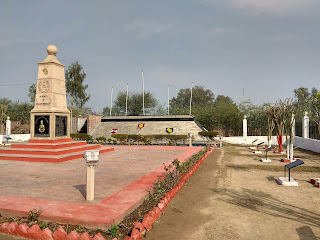
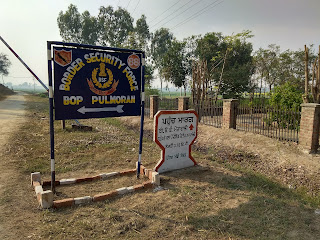
Pul Kanjari/Moran in the 1971 war with Pakistan was occupied by them but was captured back shortly by India in a battle which has been commemorated with a memorial dedicated to martyrs near the BSF post near the border.  
During Partition riots, entire village was burnt down. Everyone migrated to the cities. Many people settled at Bagga (Kapurthala), Amritsar. Actual residents of this area left for Pakistan and other areas. Now, its residents are from neighbouring villages. The village that Sattar Singh himself came from was Dhanoa Kalan.

Indo-Pak Wars (1965, 1971, 1999)
“During the 1965 war there was no problem as such because India was on the offensive and had reached up to Lahore but in 1971, this entire area was captured by Pakistan. Second Battalion of Sikh regiment came to our rescue,” recalled Sarpanch Sahab.

'Machine guns from Pakistan side were going at a very fast speed Lance Naik Shingara Singh crawled up to the gun and uprooted it from the ground, then others took over and overpowered the rest of Pakistani Army jawans and re-captured Pul Moran. The War memorial is in memory of that battle. Army’s motto is always “Vijay or Veergati”. Army men were very well behaved and friendly. They even used to play with kids here,” he added later.

Some locals had lost their lives in the 1971 firing.
“1965 we went to the other side, 1971 they came here” is how most villagers describe and remember the two wars. People had left in 1965 their homes, but there was no “nuksaan”(damage) as such.
During the Kargil war of 1999, people had left the Village for safer areas, but nothing happened here.
                                
Landmines, Wires and Bunkers - Everyday Life At The Border Village

We went to the Village Chaupal under a large tree with many old men sitting on charpoys ordering young men to properly cut the sarson (mustard) in the nearby machine. Many villagers spoke about problems of staying at the border, apart from leaving homes when tensions rise between India and Pakistan. Although the area has largely been peaceful but whenever conflict arises they have to shift to their relatives place in other parts “andar ki taraf” (towards the inside).   
On Amritsar’s route, there is a drain which is considered as the ‘safe line’, once you cross that you are outside the firing zone, thus, safe, we were told by the Sarpanch.
“Wahan tak safe hai varna bomb to Delhi me kya kahin bhi lag sakta hai, koi safe jagah nahi hai” (Safe up to that point, although one can get hit by bomb even at Delhi or even at any other place. No place is safe) added an old Sardar ji with a realistic touch.
“When there is firing on the border we leave on our own, no such directive comes from the government”, says Suchcha Singh Laborer/caretaker of the baoli (Stepwell) since 9years, (‘Springdales School (nearby) gives him his salary, not the government’, he clarifies to us). His family also like other families, originally came from Dhanoa Kalan, but he was born here.
Villagers keep discovering land-mines even after Army has removed them. Livestock damages occur, when animals venture in those affected areas. People have also suffered injuries, have been handicapped for life, “kaafi nuksaan hua hai” (much damage).    
Those who have Farms beyond the wire, it is problematic for them to work there, there is hardly any time for farming, especially when land-mines are laid out.
Subegh Singh, has land near the wire fence. He described his many problems. During ‘foggy’ conditions, he cannot visit his fields, around the time of Indo-Pak tensions he has to leave fields, and consequently, livestock and crops suffer. They cannot take anything with them if they have to leave when tension escalates on the border, have to leave crops standing, just run with whatever is on them. They can only work on the farms near the fence from 9-10 am to 3-4 pm only, depending on summer/winter seasons. Government provides no facilities to people on the border.
He has lived closely with army, and says, ‘the way army behaves depends on Officer to Officer, they can be nice/ rude depending on their mood/day.’
Santogh Singh 70 years, originally from Dhanoa Kalan, has been a local friend of the Army. According to him, it would be better if government could settle them somewhere at the back but no help has come from the government. ‘If ever enemy attacks at night, we have nowhere to go. There was a stream which used to run up to Lahore now it is dry (water scarcity in summers). We are extremely unhappy here, “Rabbji dushman ka bhi hamare jaisa haal na kare” (what we are facing God even our enemies should be spared of such conditions).
He adds, ‘the land that we have here even half of that land if government gives us, we will shift, we will have some peace of mind at least. Our youngsters have no jobs and BSF is now recruiting girls?  Can girls fight? When bomb falls, Bibi will fall too’. And then he checked himself going in full Punjabi flow, as he sensed there was a woman sitting in the group.   


Bunkers are still in place at different places in the village. Every morning in a tractor BSF jawans go to check if there are any footprints of anybody crossing over on the damp soil. Sometimes there have been instances of people crossing over from the other side and they hand over the intruder to the jawans, if they are seen as harmless are often sent back very rarely taken into custody. Nobody has gone from this side to the other side of the border, as they say “Kyun jayenge?” (why would we go?)

The barbed Wire fence on the border is quite new. Only done on the Indian side of the border, then there is No- Man’s land and then the Pakistani sarhad starts. Pakistani side has no wire or fence on their side.

On the question of militancy during the late 1980s-90s era, our questions were met with  silences and then with unanimous murmurs of, ‘this part was not much affected.’ Later Subegh Singh added, ‘at that time there was no wire people did cross over to the other side for ‘training’ though’.

Religion at the Border  
There is a big gurudwara at the Village divided into two parts, older part and a new recently built fancy part with a huge kitchen where langar arrangements are made to celebrate special occasions.
There is a Dargah greenest green which is now being maintained by Rajbeer Kaur and her family since its caretaker Muslims left for Pakistan. Kaur and her family know nothing about the Dargah, who is buried there, his name or genealogy of the Buzurg but has extreme reverence for the shrine of which she is the official caretaker now. 
She had children after 16yrs of marriage and has immense faith in the buzurg’s powers. Inside the Dargah which is decorated with festive colorful buntings, and photos of all ten Gurus, Sai Baba and any other figure that Kaur and family may consider respectful or reverence- worthy are put up as a sacred symbol. 

Village on the border has its heart at the right place.      


With special thanks to Shashank Gupta and Shivam Pratap Singh for helping out with the translations, inputs, travel and other things.
*Names have been changed.

Saturday, 15 September 2018

राह में बिछे बादल के रंग रूप का
पांव पड़ने पर खुला वो दर था धूप का
छू के गुज़री मुझे बरसात की सीली सी हवा
गहरा गया रंग और तेरे नक़ूश का 
तेरी याद के जज़ीरे पर तेरे शहर के मुसाफिर
इंतज़ार करते हैं गैर हासिल ऐ-मतलूब का 
तेरे करम की मेहरबानियां और फ़िराक़ के सितम
दिल बैठा जैसे बारिश में घर हो फूस का
बाद अज़ मर्ग मिले राह की खाक़ से हम
जहाँ बस्ता था घर मेरे मेहबूब का
कल शब् खिली चांदनी में टूटा था दिल के सिवा 
वो सितारा था आसमान पर कोई जुनूब का
راہ میں  بچھے با دل  کے  رنگ روپ کا 
پاؤں پڑنے  پر کھلا   وہ  در  تھا  دھوپ  کا 
چھو  کے  گزری  مجھے برسات  کی  سیلی   سی  ہوا 
 گہرا  گیا  رنگ  اور  تیرے  نقوش  کا 
تیری  یاد  کے  جزیرے  پر  تیرے  شہر  کے  مسافر 
انتظار کرتے  ہیں غیر  حاصل اے  -مطلوب  کا 
تیرے  کرم  کی  مہربانیاں  اور  فراق  کے  ستم 
دل  بیٹھا  جیسے  بارش میں  گھر  ہو  پھوس  کا 
  بعد  از  مرگ ملے   راہ  کی  خاق  سے  ہم 
جہاں  بستہ  تھا  گھر  میرے  محبوب  کا 
کل  شب  کھلی  چاندنی میں  ٹوٹا  تھا  دل  کے  سوا 
وہ   ستارہ   تھا  آسمان  پر  کوئی  جنوب  کا 

Raah me bichhe badal ke rang roop ka
Paon padne par khula vo dar tha dhoop ka
Chhoo ke guzri mujhe barsaat ki sili si hawa
 Gehra gaya rang aur tere naqoosh ka
Teri yaad ke jazeere par tere shehar ke musafir
Intezar karte hain gair hasil-e-matloob ka
Tere karam ki meherbaniyan aur firaq ke sitam
Dil baitha jaise barish me ghar ho phoos ka
baad az marg mile raah ki khaaq se hum
jahan basta tha ghar mere mehboob ka
Kal shab khili chandni me toota tha dil ke siwa
wo sitara tha aasman par koi junoob ka

Monday, 6 August 2018

Me and My 'Chhat': Terrace' Memories

Once upon a time when people lived in homes where they had both land and terraces to themselves (chhat aur zameen), had good view of other people's homes and did not live in mid-air existence of box shaped homes, that is where my childhood memories stay. 
We had a part of sky marked as our own with some stars and a moon thrown in for decent decoration!
During most  of 1980s and 1990s the single/double storey homes at Shahjahanabad or Purani Dilli, terraces could give the view of Jama Masjid or even Red Fort and if you had higher 'tanki wali chhat' (where water tanks were kept) or 'barsaati room chhat' even better!!
The terrace was a special place in winters when we would sit on cots and peel oranges in the light winter sun after coming back from school. Older women would refresh razais and lihaafs and we would listen to endless stories and qissas of older generations or just their gossip.
In the early evening of summers we (children always ready to play with water usually got this duty) had to do the "chhirkav" or pour water on walls and floors on the roof before getting the cots out so that water cools down the roof temperature by the time people, mostly male members of the house, came to sleep upstairs. The ACs were not widely available and people used to prefer sleeping under the star lit skies with naturally cool air. Then there was also the additional duty of putting bistars on the cots.
We had a room on the terrace (barsaati) which had all the extra unused stuff /kabaad, an almirah where many books of my father were kept who had the habit of night-time reading and there was a bed too with a solitary bulb. All the beddings/bistars and folding cots were also kept here in this room. I often used to hide myself in all the unused stuff or smell the old books in the almirah or just lie there day dreaming only to be woken up by my Mom shouting my name and sending some neighbourhood kid to look for me!
    
During monsoons, children would bathe in the rain, the water outlet would be closed with bricks and a small desi swimming pool would be created for everyone to enjoy.
The houses were mostly open and you could also peep in and smell what others' were cooking in their kitchen.  
Many love stories started and died on these terraces, as young lovers stared into crush's homes and one could see boys and girls even at the height of summers on their rooftops (with no mobile phones available) throwing paper planes with messages on them or communicated through long-distance exaggerated hand movements/ 'ishaarebaazi'! 
Kabootarbaazi (pigeon flying), kite flying with loud music sometimes even dancing were other activities that people enjoyed on terraces. 15th August Independence Day was always celebrated flying and gathering kites from other people's roofs. 
Diwali and Dussehra fireworks were other views we looked forward to as kids on our terraces.
On Eid, Chand spotting was a special activity as everybody gathered on their rooftops to search for the elusive moon. Our neighbour 'Bhai Chand' and his bald brother would be subjected to some of the loudest jokes that people used to crack across terraces. 

On our terrace, we (my brother and some other neighbourhood kids) played cricket mostly (some other games were also often attempted like football in the rains, violent hockey mostly to hit each other with, etc.) and whenever the ball flew to nearby homes the fight was always about who would fetch the ball and get the next strike with the bat. The special skill that I thought I had was climbing up/down on high walls of people's homes and then if ever any elder would catch us trespassing in their homes or on their terraces to sweetly try and wriggle out of  the situation by conveying "Ammi's salams" and then as reply take their 'salaams' back to Ammi only to be scolded and reprimanded by my mother for doing too much 'awaaragardi'!
I had most of my accidents on terraces as well. As a child, I often fell from the stairs or somebody pushed from the wall or just fell trying to be 'brave' or 'showing off' some weird moves (often!! For example, the challenge would be how far you could climb up the terrace wall without falling down and eventually falling down from the wall and then be rushed to the Neighbourhood doctor with a bleeding head and be banished from climbing up any wall whatsoever for few days!! ).      

The night time long conversations as teenager with my childhood friends about 'life's philosophy and dreams' were special as neither friendships nor philosophy or dreams survived the harsh realities of life.    
At our old Shahjahanabad home, we still have the roof and the floor but the surrounding buildings have now gone four-five-six storeys high and there is just no view available from our two-storey home.
I now stay in a flat at Greater Noida and I cannot fly kites on the rooftops anymore :( 


Another terrace story: My memory of Razai stitching on Rooftops
http://uzmaazharali.blogspot.com/2016/05/the-making-of-razai-quilt.html

Yuchi chalte chalte

  यूँही चलते चलते  गुमान हुआ  कोई चेहरा ऐसा  नुमाँ हुआ   मुड़ मुड़ कर उसको   राह में देखा किये  देख कर फिर  सोचा किये   ये तो वही है   लगा के ...